Saturday, July 22, 2006

War Withdrawal: Part One


On Friday morning, the American and I woke up at 4, hailed a taxi and arrived at the Dbayeh Bridge 'Processing' Center by 5 am - two full hours before officials there were to start letting in the first of the Americans.

Through the windsheid of the taxi, we could see that the bridge was in chaos. The exit ramps leading up to the overpass bridge were full of cars and the pass itself was bustling with people - a mini refugee camp. We jumped out of the taxi and ran towards the crowd with sun just breaking over the mountains to the east.

The day before, the State Department had issued their infamous "first come, first serve" email. Everyone came. Talking with a few people in the crowd, many had been there since midnight, sitting on the overpass and waiting. Those same people at the front now found themselves crowded and shoved into the truck barracading us from the actual processing center itself. As the hours between five and seven ticked away, the crowd grew more and more restless; like yesterday, there were the screams of babies, the screams of mothers for their babies, the screams of fathers for the mothers of their babies, demands for entry or information or something shouted out in vain and in anger.


This crowd was far bigger than the Thursday's and it grew quickly we approached 7 am - exacerbating the overall tension of the scene. I held up my camera to take a picture so that I could better gauge the number of people only to realize that the crowd actually disappeared down the slope of the other side of the bridge. My guess is that - by seven am - there were already 7 or 8,000 people on that overpass.

"Folks - OK, folks, we just need you to remain calm, OK? Everybody's going home today, OK? We've got spots for 5000 people, OK? Everybody's going home! Let's just - hey! - let's just be civil here, OK? We've got young children here." Maybe from where he stood up on that truck (the Lebanese military had created a barrier of trucks and razor wire to keep Americans out of the American run processing camp until State Department officials gave the OK to let people in) gave him a better view of the crowd; I don't know. But the consensus among myself and the American - both of us pretty tall - was that this was far more than 5000 people already and that the gentleman from the State Department with the whining, pleading voice was terribly wrong. Not everyone was going home today - not even close. Crowds can smell BS pretty quickly; the people grew increasingly anxious.

When people are in crowds, it's amazing how quickly they lapse into talking as if they're character actors on a 1950s television drama. You've all probably seen old television shows where randoms shout out their two cents in perfectly timed increments - or at least seen such scenes parodied by the Simpsons. "Hey buddy! Let's get some water down here!" "What about my children?! Please, I have a child!" "We've all got children - wait your turn in line just like everyone else!"

Before this experience, I would have guessed that that sort of thing never actually happened, that it was just a device used by writers to introduce a large cast of characters or to give the overall "feel" of the mob. I would have guessed wrong - mobs actually act like that. It's surreal.

The only difference is that when you're there, you find your heart and your head being tossed back and forth, slapped around by people's calls for this or that...you find yourself constantly wanting too to shout, to control, to impose some sense onto the situation - you're trying to figure out who to ally yourself with as part of the bigger question: how the hell do I get out of this? And with so many people pushing you and shoving, at some point you will be called out, you will have to take sides on something. I heard yelling directly behind me and felt pushing on my pack. Looking over my shoulder, I found a woman just slapping my backpack. "Please, I must get through - I must get through I have a child!" The kid looked about two? three? "Is he sick?" "He is a child!" "He looks a lot like all the other children here" I turned around and tuned her out.


Too, at some point it dawns on you how dangerous the situation is - you realize that no, this isn't TV at all. And...oh! Reality hits. A few feet in front of me, a woman had to watch her elderly mother collapse of heat exhaustion. The sun was coming up and unlike the overcast Thursday, there wasn't a sky in the cloud today; Friday was going to bake us. Sitting, exposed on the highway with bodies packed around her like cattle, the old woman just gave out; cries for help went up. Again, though, we had thousands more in the crowd than we did the day before - but within roughly the same amount of space. With bodies so close, medics had a hard time getting to the elderly woman - her daughter had to just stand and weep and wait.

The American and I, seasoned veterans of this horrible operation, just waited it out, clutching the green waivers that we'd received after a full day of waiting the day before - an 8 1/2 x 11 promise from the State Department that we were to be the first let in today for processing, the first on the boat. This was a lie. It meant nothing to them at this stage. So, when waiving the green sheet of paper didn't work I took the $100US bill out of my pocket (my emergency travel cash) and waived that at the DontS on the truck. I don't think they thought I was funny.
Discarding the waiver system they'd put in place the night before, the Staties asked the Lebanese military to simply let us in 'first come, first serve'. The American and I had managed to work our way close enough to the front that we were let in just about nine.

Here's how the processing operation worked inside. Unlike the bridge which was primarily controlled by Lebanese police, inside you found only State Department workers and Marines. There were four checkpoints set up: 1) ID station, 2) wait for security tent, 3) security tent/baggage check and 4) manifest desk.

The ID was simple - if you had a valid US passport or visa or relative, you were through. I literally held mine up as I was walking past the Marine examining papers; he waived me through at a glance such that I never had to so much as break stride.

The "wait for security" tent was exactly that. Here's where the green waiver actually played a role - they let me bypass that tent which looked to be about a 30 minute wait. This was my reward for 9 hours of waiting the day before.

The security tent/baggage check was the bottleneck of this entire operation. This was where the combination of poor diplomacy, logistical planning and communication reached the breaking point. It was the root cause of the back up, the reason why people had to wait in tents inside the processing center and therefore the reason why people had to wait out on that torturous overpass.

Logistics: I don't think I need to talk too much to why the email system(s) they had in place failed. I mentioned in the last post that they didn't properly anticipate that more people would show up than invited (as people are naturally prone to bring their families with them when evacuating a warzone); too, their "first come first serve" system implemented and advertised the night before via email and radio meant an entirely new level of chaos - an overwhelming amount of people who would be spurred on to unruliness by the fact that there was an overwhelming amount of people. So, suffice it to say that as far as "pre planning" and communication with the public was concerned, the Department of State needed to do a far more effective census of the people they needed to move. Of course, as they were days upon days late with the entire evacuation effort (direct evidence that the US policy of "wait and see" might need some re-tooling)(well, this and Katrina)(oh, and the 9/11 CIA breif) they didn't have time for that sort of thinking or planning.

But really, simple ropes, counting of people as they came to the overpass so that the obvious extra could be told to return the next day- just simple event planning and math would have helped the situation enormously. Let's look at the stop gap inside the actual processing facility: the baggage check. As I sat in line, I clocked the time it was taking for people to get their bags checked in front of me. Getting your bags checked and getting through security consisted of: that 'wipe' thing they do to the zippers of your bags looking for evidence of explosive materials, opening your bags and going through everything you had (making the 'wipe' totally needless?)and then waving the magic metal detecting wand over you, arms outstretched.

For thirty people, my average was just over one minute per person (normally a little less, but every so often a person would show up with, say, 3 or 4 bags (in spite of the request that we bring no more than 15 kilos of luggage)). If the Military and the DoS wanted to fill their ships today, they would have to move 5000 people through that check point. At the baggage checkpoint, they only had two lines set up.

5000 people / two lines X one minute per person = 2500 minutes or over 40 hours of processing. It was taking almost two days to fill one day's worth of ships. When I asked a marine who was helping keep the lines in order how quickly they've been able to process people through this checkpoint, he said that they average about 100 people per hour (but that today they were aiming for 200). I wished that instead of aiming they would have just done some math.

So that's logistics. But to be fair, the logistical planning for half of this operation was impeded by the State Department's other huge weakness: diplomacy.

So again, 1) you wait on the bridge with the cattle under Lebanese Police jurisdiction until being let in for processing and then 2) you're processed before 3) being escorted to the ships. Granted, (2) was a wait and poorly thought out, but at least it was safe - no insane mobs there. It was the bridge itself (1) that was actually quite dangerous, where people were passing out, where US State Dept officials screamed at us over megaphones for calm, for peace, hey we've got children here, etc.

The thing here is that the bridge was still under the jurisdiction of the Lebanese police force. It was obvious that, well, being Lebanese, they really couldn't care less about the situation of 'America'. Occasionally they stood shoulder to should and held us back from pushing through to the processing center, but mostly did little more than stand there and guard the razor wire. Here, the US's inability to negotiate some sort of queue system, or counting system or something in order to quell the unrest was brutally apparent.

The irony of the whole situation was that the US would claim to us that they had to keep us on the overpass for security reasons. Within the processing center/under US jurisdiction, they were keeping us in small groups - there, they said, they weren't going to allow Americans into large groups (while on "American Soil") in case there was some sort of Hizbullah strike - I guess the thinking was that less would be killed or injured if we were in small packs. But....GAH! What of the thousands of Americans clumped together on a highway overpass?! Totally, utterly exposed? What system could have been worked out to save our bodies and our sanity there? The whole thing reeked of a) the USDoS trying to make sure that no litigation could be brought against them in the event of some catastrophy and b) a total diplomatic failure at the expense of thousands of people.

It just blew my mind. I got through the checkpoints as quickly as possible. When I reached the manifest desk (where they took your name and information so that you could then be officially registered as an evacuee) I realized I had lost the American in the tussle. I would see him again, though, on the flight deck of the USS Trenton.

Thursday, July 20, 2006

Complete nightmare


Today, I had to elbow a reporter in the chest to get him stop pushing me (and as a result the people in front of me) into razor wire for the sake of getting a shot.

First the news.

When I got back to Talal's last night, I heard him swear for the first time, for the first time get actually emotional about what is happening in Lebanon. It's starting to happen. This is what he was angry about:

Over 300. All civilians. Compared to the Israeli number in the tens (still with a high percentage of civilians), the news has helped to shift the tone of the war. It's much more serious now, much more personal than it was even days ago. Then, Talal laughed it off pretty easy, saying it would be one, two days...some damage and then they go home. "Is always how it is." Not this time, I think.

The world seems to be getting more and more polarized on the issue. Some want peace, outright. Some still seem content with war. The issue is dividing communities. Everywhere, everyone is weighing in. It's growing, and it's growing fear.

Where is my country?

Here in the city, things are complicated on a different scale:

Today in a cab - Cabbie (to me): "Why are you still here? Why? Leave Lebanon!"

Me: "The boat was full. Why are you still here?"

Cabbie: "Where can I go? I live in the south. Every night, Israel f***s my home. Every night. Last night was the first I have slept in a week."

(The same can be said for me - with international evacuations taking place, Israel has calmed its airstrikes in the city. Last night was so wonderfully peaceful. The only hit we took was to a parking lot in my neighborhood - apparently, some construction company had parked a large drilling machine (the kind you see used to drill holes for large posts and things) in a lot near the hostel. The Israelis, it is thought, took it to be a missile launcher.)

Me: "Will you fight?"

Cabbie: "I have lost - in the civil war, I lost my whole family. A brother, my father - when I was a kid, yes, I would fight. Now, look (motioning out the window) look at the bird - I could not kill a bird. Could you? Could you kill a man?"

Me (thinking about the one and only thing I have killed with a gun - a turtle in a pond in Texas - and hating myself for even that childish exploration): "No, no I couldn't."

Cabbie: "And they want you to. Today, today I was asked am I Christian? Am I Muslim? You know Sunni and Shi'a? Today! I was asked it! It never change! Lebanon never change."

There had been this idea early on that such a provocation of Hizbullah might cause, yes, a response from that group but then a secondary response from that groups enemies within the country...leading to another civil war. I didn't think that a valid concern until I heard what people were talking about on the street...And in the news.

Still, the main issues (to me) are the dead and the injured - as well as the crippled city. At least for right now. And my heart really felt sick when I arrived this morning to take my place in line for a boat to Cyprus.

Back to the boat. The American and I showed up just after 7 am where we found that the Lebanese military had set up a blockade (two large military trucks with razor wire between them) to keep people back. As the minutes passed, the group waiting to be let in past the Lebanese to be processed by the Americans (marines and State Department Reps) grew quickly...and quickly grew restless.

Here's a quick summary of how the State Department is handling getting people to the boats. The first step is "contact". We've all registered with the DontS through phone or email. They have a list (according to them, today) of almost 35,000 people who either want evac information or want to get out. 10,000 bigger than estimated in most news articles. For the past couple of days, the DontS have been calling the same number of people that they have room for on whatever boats can take bodies that day (two military cruisers are now transporting Americans, alongside the well publicized "Orient Queen" cruiseliner). This, obviously, has been a misstep as not only will the invited show up to take their place but so will their family members (OF COURSE). So, from what I can gather, they have had up to four or five times the number of people come for processing and departure as they can handle each of the last two days.

As you can imagine, the scene this morning was total, absolute chaos. The Americans ("for our safety") process us miles from the dock and then transport those processed to the ships by bus. The processing point is a parking lot north of town and the line leading up to the processing point is on an overpass of the highway. We sat, baking in the morning sun, gulping up exhaust fumes and trying desperately to find some information, something to act on, something to think. Babies were crying, adults were screaming for respect, the military was screaming at us about lists and checkpoints and please calm and can we form a line - people got thirsty and hungry, shoved each other. It was a terrifying display of the worst parts of people. Including me - once or twice.

The DontS would come forward with "information" only once every hour or two; I think they stayed away as a) the fact of the matter was that they were simply taking an incredibly long time to process people already inside and had nothing new to report and b) they simply couldn't respond to the demands screamed at them by this incredibly irate mob. Some people waiting had waited all day yesterday as well - they had been given vouchers which promised them easy access today...at the appearance of a Dont or military person, the vouchers would shoot up into the air frantically, madly.

The thing was, the waivers didn't matter. Nothing really mattered - there were four for five systems, different rules changing all the time, chaos. An overwhelmed StateDepRep ran frantically about, sometimes screaming this or that into a weak megaphone...

It was basically children and the sick first (which took up the majority of the spots for today) and then, with really no system of actually getting to the people with vouchers, it devolved into first come first serve. Hence, this sad email from the State Department today:

Because of the high-volume of Americans going to the ship processing center,Embassy Beirut is moving from a reservation based system to a first come,first serve system for assisting Americans in departing Lebanon.

Americans wishing to depart Lebanon should monitor the local radio -105.5FM,or the embassy website http://lebanon.usemabassy.gov for the latestinformation on when and how to depart Lebanon.

We waited nine hours in total, moving some 300 feet. During that time, I only got into two scuffles. First, while waiting close to the razor wire, looking for someone to direct a question to I was pushed from behind into the two young girls in front of me which then pushed them shockingly close to the razor wire set up by the Lebanese. "Back off!" I yelled over my shoulder but the pushing kept coming. It was (guesses?) a reporter, leaning into me to get a good shot of the military talking across the threatening looking wire to the people pleading for assistance or answers (the military had scolded him earlier and told him to go - he was using us as cover). He dug into my back, I took my elbow and knocked him in the chest back hard and turned and (actually) gave him that raised eyebrows/shrugged shoulders "you want to go?" motion...and...yeah...just a heated stare down into his black eyes (they were black!) for about 10 solid seconds. I guess blue beat black - he walked. "Boys, stop fighting!" yelled an Irish woman (who I had met ten minutes earlier) just as the stare down came to a finish. After he left, I went over to her and said "Sorry, yeah, sorry that was pretty childish...but it was pretty cool though." She laughed and quietly conceded it was cool. I'm still not sure if it was actually cool. Cool's hard.

But yeah, in the mob people were going insane. What's funny about mobs is that characters start to appear - it's like standing in a broken elevator with 1000 people for 9 hours - you get to know them pretty quickly as they're under amazing stress. For his part, I can't speak highly enough of the American. Dude keeps his cool, keeps it light. He's also particularly savvy at getting physically through a crowd and knowing what information you should and should not trust from the talking heads that came out occasionally.

It took the American and another friend to calm me down during the only time I officially lost my cool - the second scuffle. The day was hot and no one had brought enough water. Every so often, a marine would show up with a few bottles of water and instruct the crowd to pass them around and share them. I had brought my own and so would just pass the bottles to the woman behind me - the second time around, I noticed her take the bottle and slide it into her stroller (she had four children with her) where, too, there was another full bottle of water from the last distribution.

"Excuse me, are you...are you just taking that water?"

"I have four children."

"What? WHAT?! Look around - everyone here has children! We're supposed to share this water with people who need it!"

"There's no water on the boat!"

"Look, Jesus Christ I'm not going to argue with you - you do what you want but I don't know what makes your children more thirsty than any of the other kids here - but whatever, let's just be clear here - you're just stealing from people - you just do what you want."

When I turned around, the American was sitting on his backpack and smiling at me. "This always happens in crowds."

I had forgotten to try and find a silver lining. I mean, you had to scour the place for it, but this has been something I've been trying to work on. A friend of mine (who seems to find the bright side to absolutely everything - to my general awe and often to my annoyance) told me the story of how she developed optimism as a skill. As a child, she had to take a horrible hour long ride home from school on a bus full of kids she didn't like - the most painful part of her day. To try and change how it effected her, she started practicing finding the good things about this daily nightmare - would think to herself the good things about how the bus was well constructed and how amazing the combustion engine that ran it was, this or that good thing about any person on the bus...she worked at it and it worked.

Today, here are some of the things I thought as practice:

"That Razor wire is so shiny"

"That man really puts his whole body into screaming"

"Man can that baby just suck on that toy"

In other, better news:

When we got back to the hostel, it was dark. The city has been doing rolling blackouts for the past week. We ran up the stairs - myself and the American - to find sitting in the lobby Talal with...a girl.

Last night while looking through and deleting some of the photos that I had uploaded to the Hostel's community computer, I found a few pictures of Talal and this same young woman by the sea. The pictures seemed to be of some date...and I thought it kind of adorable that Talal had taken the time to upload them to his computer - to save them in spite of how relatively unspectacular they seemed (lots of out of focus, odd angles, etc.)

You could see from the photos two people who - although they looked from their body language to be a 'new' couple - genuinely enjoyed each other's company. Just a lot of honest, playful smiles in the photos.

When we walked in to find them in the lobby...they were just sitting, talking...they looked just as they did in the photos, as two people who took comfort, joy and a mature excitement from the other that gave each of them a sort of glow. Talal was quiet when we walked in (he's normally quite a character); he had the quiet look of confidence that comes from contentment, from securing something for himself that fed something pretty deep. He was happy.

I can leave Beirut.

Wednesday, July 19, 2006

Francisco speaks.

This morning, a Spanish newspaper ("El Pais") wrote a story on blogs in Beirut (Reading While Falling was featured).

http://www.elpais.es/articulo/internet/Beirut/centro/atencion/Red/elpportec/20060718elpepunet_4/Tes/
We'll get to that later. First, the news of the hour:


There she is, my beautiful 'Orient Queen'. She came into port last night. At first, when I heard the horns blowing as the ship docked I thought it was an air raid siren. Talal laughed at me.

Again, I'm right by the port. I can SEE this boat out my window, sitting there taunting me. I've not yet received an email from the DoS (I call it the "DontS" when I'm angry) but this morning, the American simply packed his bags and went for a walk to the port. Upon his return some thirty minutes later (we laughed when he got back, Talal asking him if he had changed his mind?), he claimed that he got through the first level of security (Lebanese military gaurding the port) and then made a b-line for a boat. American Special Forces made him then register at a tent set up on the dock by the cruiseline. To hear him tell it, it was just heartbreaking - they gave him a key to a room and everything, checked him in, a CBS news person begged him to take a camera and role footage of the trip and give it to another CBS person on the other side...it was all so close. But Special Forces stepped in again to do one last check before he jumped on the boat - he wasn't on "the list". "Sir, there are a number of reasons we cannot let you on this boat." "What are the reasons?" he asked. "Yes," one of the Lebanese military standing gaurd chimed in, "he's an American - let him go, just let him go on board."

"Sir, there are a number of reasons why we cannot let you on this ship."

And that was that.

But there is some good news. First, the American got an email upon his return to the hostel. It reads like this:

The Department of State and U.S. Embassy in Beirut received yourresponse toour email regarding assistance to Americans wanting to depart LebanonforCyprus with onward travel to the United States.Screening for departure will take place the morning of Thursday, July20 .

To facilitate the screening process we are staging it in two-hourshifts.Please e-mail us at: askocs@state.gov to confirm which of the timeslistedbelow you wish to be scheduled for.You and your family should be at the (7 a.m., 9 a.m., 11 a.m.) screeninglocal Beirut time.Screening for additional departure will take place in the afternoon ofThursday, July 20 . To facilitate the screening process, we are stagingitin two hour shifts. You and your family should be at the (1 pm, 3 pm)screening.You should come prepared to wait, and bring adequate water and food tosustain you and your family.

You should report to the Dbayeh Bridge in Beirut, specifically theMobileForces Barracks (Marina Khoury) facing the water station pump nearDbayehPort.What to Bring:What to bring:(1) Passport or green card (as appropriate), money, credit cards, anyotheressential documents. Lebanese nationals should also bring theirLebanesenational ID, especially if they have acquired a new US passport duringthisstay in the country. (They will need to show their Lebanese ID to theLebanese immigration authorities in order to obtain an exit stamp intheirpassport.)(2) Each person should bring only one small carry-on, maximum weight 15kg.In that bag, they should bring a change of clothes for 2-3 days,essentialmedication, glasses/contact lenses, toiletries, water, snack food. Ifbringing children, it is advisable to bring along one toy for eachchild,diapers and formula as appropriate, etc.

What to Expect:(1) The initial screening will involve verification of your Americancitizenship and eligibility for travel.(2) To ensure your security and that of other travelers, a securityscreening will also be conducted.(3) Once these steps are completed, you will be taken by bus to theport.You will go through Lebanese immigration procedures at the port, beforeboarding the ship.Arrival in Cyprus and Onward Travel:(1) You will be met by U.S. consular officers in Cyprus who will assistyouin moving to staging sites for preparation for onward travel to the U.S.(2) We are arranging charter flights to take travelers to the U.S.(3) Once in the U.S., you will be able to make onward arrangements toreturnto your home.

I didn't get any such email, but I'll be there tomorrow morning. Too, as of last night they've decided that we won't have to pay for our own evacuation. Here's a transcript from last night's Larry King Live where Sen Stabenow (D-Michigan) announces the news:

http://edition.cnn.com/TRANSCRIPTS/0607/18/lkl.01.html

Key Excerpt:

KING: Let's see the thoughts as we go to Washington. Senator Debbie Stabenow, Democrat of Michigan and Congressman John Dingell the veteran Representative from the state of Michigan. Senator Stabenow, do you offer any hope to Sandra?

SEN. DEBBIE STABENOW (D), MICHIGAN: Well, yes. In fact, just a few minutes ago we finally got the State Department to say, first of all, they're not going to charge people to evacuate them, which was just a horrendous policy that they were talking about doing. People who are trapped. Thank goodness people are not trapped and can leave Israel. But in Lebanon we have 25,000 people from America. Over 5,000 family members from Michigan who are literally trapped. I have been spending time on the phone and my staff has with hundreds of people, trying to help children who have gone to visit grandpa and grandma, folks who have gone back for weddings and so on. And so finally, we're hearing that there are going to be, after six days of waiting, that ships are finally going to arrive. But I have to say, Larry, that this reminds me of watching the pictures of people sitting on rooftops in New Orleans that should have been evacuated much more quickly than they were. Six days is way too long. People are afraid and have every right to be. People at home are worried about their families. And it's been at least six days, and it may be much, much longer before people are able to get home.

(End Excerpt). I'm still trying to figure out who "they" is. Exactly.

So, I took my laundry down from the clothesline and started packing my bags for tomorrow. I...I thought this would be an exciting exercise - like, that I'd be incredibly happy to see this day come. Honestly, though, I just wanted to punch someone. I realized then that the frustration I had been feeling for the past few days was not the result of boredom - simply, I hate war. More than that, I hate the feeling of powerlessness that comes from hearing jets overhead threaten innocents and then hearing ...God...just hearing Bush...why? The world is waiting - please, just step in and stop it. You can do it - you, sir, are the only one. Why?

I came to the middle east to do a conference on conflict mediation. I cut class A LOT, frustrated that I couldn't get my hands dirty. I wanted to get on the ground. Wish answered.

But seeing "it" now on the ground, I'm reminded why I'm attracted to work over tourism - the simple feeling of making some progress. Here, floating through the streets, the size and complications of the conflict are mind numbing. I tried in vain to get some element of truth out to the people back home (see previous posts) and hope that this stupid blog helped some of you understand this experience a bit.

But the pictures, the snippets of dialogue, the little stories cannot - could never - convey the overwhelming fear I have now at the advent of something far more treacherous than even an Israeli bomb: acceptance.

There was that fateful moment yesterday when, sitting in Talal's lobby we found ourselves flipping through the channels and settling on watching a re-run of The Highlander rather keeping glued to Al-Jazeera. This odd malaise seems to have taken over the city, like war is just here and the city and it's people have let their eyes glaze over as a means of getting through it. It is acceptance manifesting itself - and it's terrifying. In Hamra, the cafes still blare the news creating this odd din as you walk around the city but fewer and fewer people are actually watching the screen. It's ...it's just happening now. It's life for however long. And it's crushing me.

So there is this sophomoric allure to staying, to just staying put and trying in some way to at least be a part of the relief effort (yesterday, I joined a student group at AUB that takes donations and then delivers them to refugees - so far, they haven't called...and I've been waiting...waiting just to do something good - for the love of God, something.) I feel completely useless - all I want to be is President of the United States. Seriously, just give me twenty four hours. PLEASE.

Talal offered to drive me over to Hamra where there's still a 24 hour net cafe up and running. I asked him as we drove, "What are you going to do now?"

Talal: "We will drive, we will drive across the city."

Me: "No, I mean what will you do? For the next couple weeks or however long?"

Talal: "(Shrug) Strange things are happening. Very strange." He turned up the radio.

You can see people starting to just...spin it. Just push it in circles as a way of dealing with it:

Cabbie from last night: "Things are bad in Lebanon. You know, but you need to...there is a saying that some wars can solve some problems. I think every 20 years, we need war to change things. Ideas come, they go. Ideas are like the fashion. Sometimes short, sometimes long. Me, I fought with a gun in the 80s; then, I put my gun down. Now, I have three children - two boys, engineers, a daughter getting and MA in Religious Studies. Boys and girls are good."

Me: "Do you vote?"

Cabbie: "I vote, yes. I vote my mind. I read. Everyday the paper, I know how to read what they say and what do not say and know what is more important."

Me: (re: the sectarian system here) "Does your vote matter?"

Cabbie: (laughing) "Things...no things here will never change. No."

So, it all comes down to the same question: what are we doing, really? Or maybe better: What should we do - as a country, as citizens? What is the vision here? And, even better, how do we make it happen?

Back to Larry King from last night. This time a quote from J Dingell:

KING: Congressman Dingell obviously they've waived the fees. Are you criticizing the other efforts?

REP. JOHN DINGELL (D), MICHIGAN: No. I'm not criticizing any of the other efforts. I want to see this matter resolved, and I want to see the United States begin to provide the leadership that it can provide for peace, to bring the countries of Europe and the world together, to bring the people in the nations in the area together, and let's get started bringing peace to the area and let's stop having this finger pointing where the Israelis say, well, the Hezbollah did this and Hezbollah says, well, the Israelis did this. I happen to think that Hezbollah started it, and I think it's shameful. But I think Israel's overreacted. But I don't think those are the points that we ought to address. What we have to address now is how do we ease the suffering of those people?

(end excerpt).

Two readers from Spain took the time to post comments on rwf. I thank them both. RWF - to me - is not about personal attacks or any sort of tit for tatting - and so, I've made it a rule to never respond directly to one persons remarks. Doing so just isn't what this blog is about in content or spirit. However one of our posts from Spain brings up an idea - a critism, I think, of the United States that I hear a lot...this will be touchy, but I'd like to talk about the ideas presented in this post from FC. FC, please don't take this as a personal attack, but you sum up nicely the general sentiment that I'm witnessing felt towards the United States...and, too, its people. All it's people. Let's try and talk about this:

"My name is Francisco Castro, from Spain. Try to think in this situation you are living. Israel, supported by your goverment, is killing inoccents. And you say still America is the land of freedom. Your goverment needs to learn more about diplomacy and less about business."

(here are a few links that will help you to learn a bit more about what Francisco is talking about:

Arms Sales Stats
http://en.wikipedia.org/wiki/Arms_trade#Top_Arms_Exporters

And, although the influence of USAid is under debate (as are the forces influencing USAid disbursement), this is a good place to start reading: http://www.globalissues.org/TradeRelated/Debt/USAid.asp

Some counter info, though, F - just an FYI: Israel using US arms illegally:
http://www.asiantribune.com/index.php?q=node/1130 )

But it's true, although the US does provide funding for a number of regions (including aid to Palestine for social programs), Israeli funding is certainly the dark horse in the room.

So, I'll just close this with two points because the blog is getting too long.

1) I think that you're right. You're right re: 'we' need to learn more about foreign policy if you are referring strictly to the Bush Administration (although, given Bush's track record with the businesses he's headed, I don't think he took much away from the Harvard MBA.

That's not news. In fact, it's pretty basic common sense. In a war where all sides are losers, Bush has actually picked a side. In spite of the fact that everyone the world over has asked "the international community" and specifically the USofA to broker a peace settlement, let the dust clear and sort this thing out...Bush, oh Bush...

This is not only stupid as far as settling the conflict is concerned (can you imagine a marriage counselor telling one side of the couple that it's all their fault???), it is incredibly dangerous. We - the military powerhouse of the world - are now on a side where endless fighting and sudden, uncontrollable escalation is the norm?

So this idea that America has some serious reconsidering to do when it comes to foreign policy is concerned (in this and other ways/regions) is, to me, well substantiated down through history. But since we're talking now: YES, where is the best version of American when we so need it? Where is my country? When will we redefine the idea of strength to include the ideas of patience and humility?

A country that uses it's strength to step forward first to listen and learn, to mediate and negotiate not simply a temporary cease fire or peace but that commits itself to helping design a plan that brings prosperity, removing us all from the idea of war by two degrees.

Bush will make the argument that there are dangerous people in the world, that we need to hunt them down where they sleep. This is the overarching 'strategy' behind the "this or against" us war on terror, I think. This is also crap - in the end, we always aim to talk it out. Always. We did it in Korea, Vietnam and now the Iraqi gov't has offered talks to the insurgency there. We do it because talking actually works.

But the hunt may be all that Bush knows? Although this strategy might be able to contain rogue states (actually, not even: Iraq, anyone?), the recent surge in non-state actors cannot be dealt with by this administration that only knows black and white and shock and awe.

There is a better, more intelligent third way here. I have a lot of friends that advocate for the revolution. Watching people's lives fall apart in front me makes me think of a conversation I had with a female student from Iran last month. "We don't want a revolution," she said "we did that, and look where it got us. It was bloody and now we have this."

What we need is a Renaissance.

So, 2) back to FCs ideas: I hear your frustrations, F. The only issue I take with your comment would be that it's hypocritical in my estimation. So, again, yes to you and to so many folks who have pinned me - an "American" - as part of the problem I humbly admit, yes, our government needs to practice a higher level of diplomacy for the benefit of all who would work with us.

But the follow up response after the agreement and the recognition of the anger that my country's government incites would be that there are still a great many Americans trying so hard to change things. 49%, I think. And we need your help. Good diplomacy, as you know, comes as the result of a couple of things, among those a) knowing who you are talking to/doing your research and b) being able to be the bigger person so as to build a trusting rapport.

Today, F, you slotted me (or, if you meant "you" to mean all Americans, then all Americans) with the extremist, ailing portion of my country without bothering to ask me who I was and why I was here in the MidEast in the first place. You assume I've/we've given no thought to and assume no responsibility for the atrocities committed by the US government and I think you are making the claim that I (and "Americans") seem to brazonly enjoy "freedom" while putting others in veritable shackles through a variety of means.

You're half right, maybe, about "we" - but as you encourage us to look, listen and learn so would I encourage the firey foreigners among the readers of this blog. There are good people in America - find us, work with us.

My grandmother taught me one key lesson before I headed off to run political campaigns, labor union campaigns and now to learn more about what will have to be done diplomatically abroad in the coming decades. Regardless of the institution, office, organization, corporation, group, church, etc - regardless of what the institution claims to stand for, what the banner reads or the wording of the mission statement - there are good people in this world and there are bad people. No matter where you are, you'll find both - sometimes, by fate or circumstance, going through the same motions. Sometimes, until push comes to shove, it's terribly hard to tell them apart. And this must be the case for outsiders looking in on 'Americans'.

It's true, my current government has "mismanagement", poorly considered ideals and utter lack of productive, insightful long term planning written all over it. It's true that my country and its residents may appear at times the picture of total ignorance. Nonetheless, that Renaissance I'm talking about? It is happening. And I and so many of my country look forward to inheriting the responsibility for this monster, taming it and finaly employing policy based on intelligent, humanistic ideas. We work and suffer through having to sit next to the old guard in a taxi while we quietly plan to - in the near future - work alongside our fellow global citizens and employ the prosperity of our powerful country to the benefit of all. Everyone.

As is the case with Bush, the time for name-calling and quick black and white judgements is over. Learn from our mistakes, please, and instead please help us by offering profound constructive and comprehensive advice. I, for one, will take it. Humbly.

In other, better news:

If indeed I'm on a sea cruise tomorrow, I wanted to do three things: first, announce that this will be the end of readingwhilefalling for a while; second, to thank you for reading; and third, to leave by saying that even should I take my 'proper' role on a boat full of Americans, I'll be staying in region for a while, still committed to sorting "this all" out. It'll continue to be the focus of my life, I'm sure.

When I was trying to figure out what I was going to call this blog, I tried to conjure up some image of "the middle east". Having just spent a month talking to a wide variety of representatives from the region, I was struck by how the ongoing conflict with Israel so utterly dominated the region's focus. How quick sides were to simply attack, how the uncompromising vision that either side had for the region overshadowed the price paid for the conflicts in blood and overshadowed any foreign idea of peace. It was an image of a man, engrossed in a book held close to his face not noticing he was falling and about to crack into the sidewalk that popped into my head.

It's a different image now. Seeing the glaze over the eyes and seeing the exhaustion in my own face even after only a week of this, it'd be a wonder that anyone involved here would have the capacity to really focus on anything. It's like the machine has just started up again.

I've got to get back to Talal's and see what I can do for him before I go.

Tuesday, July 18, 2006

Exodus starts


When I woke up this morning, the Norwegian and the American were gone.

First the big news:

http://www.cbsnews.com/stories/2006/07/17/world/main1807307.shtml?source=RSS&attr=HOME_1807307

Favorite quote: "I think we've made a mistake in policy," said CBS News Military Analyst Ret. Army Col. Mitch Mitchell. "When we see a hot war starting, whether it's going to turn into an all out war or not, we should be doing everything we can to get Americans out and I don't think we're doing a good job at all."

Back to this morning: The Norwegians (like every other country) had arranged for a boat. At 7:30 this morning, they met downtown but with 500 extra seats on the ship that they chartered, hundreds of people from other countries showed up trying to find a way on board. The American was one of the hopeful and he'd spent the evening packing his bags while myself and the Canadian sipped beer on the balcony and waiting for the nightly bombing to start. The Israelis - those masters of psychological warfare - had been flying their jets low and slow for hours, circling like sharks. It was just a matter of time.

So in the morning when two of the four beds were empty, I wasn't surprised; I rolled over and dozed off again but upon waking the second time I found the American back asleep in the bunk next to me. Apparently it was a no go. I got up and, noticing the time, called the travel agency that had booked my ill fated trip to Jordan.

They haven't been open since the bombing started, but I call every day just the same. Today, M. Barakat of Barakat Travel picked up the phone - I almost forget what it was that I was calling about.

"Hi...me...American...Jordan...bombed runway...Reimbursement?"

"Yes, yes we can do this for you - but not today. We are closing. Come later this week."

"Well, I mean, I could be on a boat to Cyprus soon - can I - "

"Later this week."

"Well, when are you open?"

"Oh, ha, that depends on the weather." (The two of us laugh).

"Look, can you give me 10 minutes? I'll be there in 10 minutes!" Run Run Run.

It worked out - he said his credit card machines were down so he handed me the refund in cash which I promptly spent on a taxi to AUB, one of the few areas of town with internet cafes still up and running.

At AUB I saw one of the most majestic sights I've ever seen. It looked like this:


It's true, by all accounts our government was one of if not the slowest to begin pulling out its citizens (I think we actually beat Canada) but it was still heartwarming to see something actually happening. Last night, a few individuals with medical conditions were taken out by either the French or US Choppers. Today, the students at AUB got called (although, really, AUB is one of the safest places in the city - articles like this:

http://www.msnbc.msn.com/id/13862665/

:are sensationalistic pieces of crap. With all due respect, for a 27 year old, this woman has a lot of growing up to do. Reading it only served to reinforce some of the fuzzy ideas I put in towards the end of my first post. I say this tentatively - we all have our own experiences and fears - and 9/11 was inexplicably horrible; though, I would assert in the same breath that we (particulary my generation) needs to learn to be stronger than this if we're going to be able to deal with the coming storm responsibly. Continuing, the only thing close to AUB that got shelled was the lighthouse. Comparatively, she's worlds away from it and surrounded by a security guard force 24/7. MSNBC should talk to my friend in the south who had a bomb dropped 100 yards from him, or my other friend that lives by the airport, or my another American who got their balcony knocked off by a shell, or to me, cautiously eying every refugee from the south that walks through the door to the Hostel, introducing myself promptly and gregariously to initiate conversation that would allow me to figure out who's pro-Hizbullah and do some quick and dirty diplomacy while warplanes bomb the port across the street.

...the lighthouse shelling wasn't much - and MSNBC knows that. They picked her because she was afraid, they picked her to sell the news. Again, don't trust the news.

Boarding the bus just as I got there, I saw a guy named Randy who I had met in a cafe two days ago. He's a late 40s schoolteacher originally from Philly who had been working in Topeka, KS for years; he'd come to take Arabic back to his students. When we talked in the cafe, I asked him mainly about his life. We somehow got onto the concept of beards (no idea how), about how they were at one time warn by fashionable young American men who had a bit of a rebellious streak to them. (I thought of old pictures I'd seen of Coppola on the set of the Godfather and of my father in a new context.) Because of the conversation we were having I found myself looking at his face a lot; he was cheery man, but you could see the tension around his mouth. He was ready to go, in my opinion. However, just now while boarding the bus - Red Sox hat squarely on his head - Randy was all smiles.

I haven't gotten a call or an email from the State department letting me know of when I'm supposed to be where. My guess is that with some 10,000 Americans to get out of Beirut and with only one cruise ship that's only able to carry 750 passengers per trip, that it will still be a few days.

And no, I don't know if there'll be a dinner show.

Monday, July 17, 2006

The war at home

This morning, ABC News called me 9 times in a row until I picked up.


It was about 8:30, and we'd all just fallen back to sleep after this (above) a series of strikes on the port. Maybe it'd be helpful for you to know where I am:

http://local.google.com/local?f=q&hl=en&q=beirut,+lebanon&ie=UTF8&ll=33.896962,35.510597&spn=0.001995,0.005364&t=k&om=1

: Talal's is the very center of the screen. If you zoom out and pan to the right, you can see the port area which is the only direct threat to the safety of the people of this area of town.

Like every other news agency here, ABC seems overworked and understaffed. I finally picked up their call and they announced that they'd like to do an interview ASAP, that they'd be over to the hotel in 15 or 20 minutes. I told them then that that wasn't enough warning, that they had said they would have emailed me last night if it was a 'go' - that fifteen minutes simply wasn't enough time for me to talk with Talal and his staff (not even up yet) and make sure that the Lebanese refugees in the hotel were comfortable with a news crew anywhere near the hotel. One hour, I told them. 15 minutes later, they (a reporter and a cameraman) were in the lobby. I was furious.


Talal's too nice to say no to anyone, so he woke up his staff (one of the boys sleeps in a fold out couch in the lobby) and sat and allowed the crew to set up the rig. The reporter kept making calls in spite of my signaling her with the universal "we need to talk" point to a quiet corner. I finally pulled her and her cameraman down the hall.

"Let me be very, very clear - we were not aware that you would be here this early - you said I had an hour - this man has had to wake up his staff and we've also got refugees from the south who probably aren't too happy to have some news people here. You have got to pay people proper respect before you just come in - "

Reporter: "But it's all great, it's all part of the story"

Me (livid through clenched teeth in spite of my call for quiet in the hotel) "I don't care about your story, I care about these people's lives."

Too tired to fight, I just capitulated when they kept staring - just sat in front of the camera hoping to get it over with. Things ran quickly and smoothly after that - the took a few shots of myself and the American watching television, on the computer, wasting time, etc. The questions they asked us were pretty lackluster, though. When I first met the reporter yesterday, she said she was interested in getting some strong opinions about how the USFed was (not) responding to the situation. I told her I was her man, and so myself and the American were ready to speak to the issues - what this war was all about, talking about the complications, etc. The questions leading us to that sort of talk never came and you can see me (if you see me - who knows if ABC will use any of me or the American) kind of quietly confused that we were again and again getting fluff questions. Too, I was asked to rephrase my wording a lot to make it less conversation and more...editable? I realized, kind of sadly, that I was a soundbite with a heartbeat.

Before she left, the ABC reporter pulled me aside and said, "you know, I hear what you're saying about having respect for people's lives, you know?" I shook her hand and said goodbye, trying to get her out the door as quickly as possibly. I don't think she had a problem with that - she left quickly, again on the phone.

It was a great learning experience. I learned this 1) have coffee if it's an early morning interview, 2) control the time, place and questions, 3) it's better to have some background with the press person talking to you, so you understand at least the nature of the person if not their angle and 4) don't be afraid to kick out the press. One things for sure, I need to get a lot better at this.

I took the American to lunch afterwards to one of the few open restaurants in the city. After days of cheap shawarma sandwiches from down the block, rice and fatouche was a great change. We learned along the way that the French ship would be arriving shortly complete with the Prime Minister and that the French would be evacuated. The Italians were all taken out by bus earlier today. Too, tomorrow or the next day the Norwegian and Swiss boats should be docking.

We heard from one of the American's friends that used to work at the embassy that now they're considering a plan involving planes...sigh.


A groundskeeper picks up flyers from yesterday's drop outside of a hotel downtown...

Sunday, July 16, 2006

I get letters

Last night, the first of the Lebanese refugees from the south came to stay at my hotel.

But first, the news: http://www.bloomberg.com/apps/news?pid=20601102&sid=aETA7P9gJAgs&refer=uk


We spent last evening in relative quiet - myself, the American, the Canadian and the Norwegian. We're the last tenants here aside from Talal himself, his nephew and a young worker from Syria.

On the roof, we sat in silence while the sun dropped. It's been nearly silent for days - no commerce, no construction, no people; the cranes on the skyline haven't moved. Just the occasional military transport thundering by.

Night is a different story. I found myself doing something kind of odd last night. The heavy shelling from the military boats and the airstrikes typically start some time after midnight. While attempting to push myself into sleep I found myself counting the seconds between the "poof" (sound of far off military boat firing) and the resounding impact of the shell somewhere in the city. And then telling myself "one mile per second."

(Fitty poster near AUBeirut)

When I was a kid, we used to play a game during those flash thunder storms common in the evenings after a hazy New England summer day. Before the start of the rain, myself and whatever kids I was running around with would run inside the nearest house and group around a windowsill to watch the sheets come down. We'd pray for lightning and when it came we'd count the seconds between the flash of lightning and the thunder crack - we'd count out loud as a group. The number of seconds equaled how far away the lighting strike was.

For obvious reasons, this technique does not apply when trying to figure out how far away an Israeli gunship is from it's target, let alone your hostel. Nonetheless, it was the only thing that got me to sleep last night through the sound of the attacks. Upon the sound of an impact, you'd hear a cacophony of cars horns - I think they beep in defiance, but I'm not sure how anyone who had honked their horn after narrowly being missed by a shell would explain their actions. Or if it matters.

After midnight, myself and the American - alone in one of the dorm rooms among a few empty beds - jumped out of bed when the sound of a small group of people entering into the room. Hair trigger, I guess.

The Syrian ushered an old man into the room while a few other Lebanese from the south were finding their way into rooms down the hall. Just after midnight, Talal's became a safehouse for refugees. When I came down into the lobby in the morning, a family of eight sat waiting to check in.

Mostly, they're quiet - I don't speak Arabic, they have no English. Well, one does. An intense young man who constantly invited us throughout the day to take walks, to wander, to talk, to eat - anything to not be alone. We entertained him at first, chatting on the roof for some time. This talk revealed how hostile he was - not just to Americans, but to everyone there. Seeing his stress, the Norwegian offered him a sip of beer. "No," he said "No. Me, I never take a drink in my entire life." "It's never too late to start," - the Norwegian smiles through his eyes.

The Norwegian - a maintenance manager at a secondary school in Norway, probably in his early forties - has proved to be quite handy. He's got lots of gadgets and scissors and such for keeping his belongings tidy. Mostly, he sits on the balcony, sips beer and smokes cigarettes while he offers us information. From him, I've learned how to tell the difference between what's a military boat shelling and what's an airstrike by sound as well as a few other things. He claims to have spent each of his vacations for the past three years here in Beirut. "Will you be back next year?" "Oh, we'll just have to see..."

After noon - even though it was cloudy today - I did what every self respecting American would do in a time of tension: I went to the beach. It was closed. Even the rocky shore along the Corniche where the locals will flock to swim and socialize during the evenings and weekends was entirely deserted. I walked through a few back alleys looking for Casablanca. The doors were locked.

Just now, here's the email from the State Department.

A message to American citizens in Lebanon:

The US Department of State and the US Department of Defense continue working on a plan to help American citizens who wish to depart Lebanon to leave in a secure and orderly manner. To assist in the development of that operation, the U.S. Government is sending an assessment team to Beirut to facilitate the safe departure of Americans who wish to leave.

The Embassy is open and will remain open at this time in support of American citizens in Lebanon. American citizens may register by contacting the Embassy in Beirut directly, or through the State Department's Bureau of Consular Affairs registration site at
http://travelregistration.state.gov. For updated information, visit the State Department's Bureau of Consular Affairs website at http://travel.state.gov.

Updated information on travel and security in Lebanon may be obtained from the Department of State by calling 1-888-407-4747 within the United States, or, from overseas, 1-202-501-4444. Additional information, as it becomes available will be released via the media, Embassy warden announcements and on the Department and Embassy websites.

However, many have called or emailed me to say that the US is putting together an evacuation plan, that boats are on the way, that people have been flown in to "assess" the situation, etc.

It's a familiar message...

Too, the Israelis are sending their own messages. On my way back from the shore, I looked up along with the one or two other people roaming the streets when we heard the sound of aircraft. Down the strip, I could hear an uproar and ran to the Phoenicia Intercontinental Hotel to find the streets littered with flyers.

They were from an Israeli airdrop - this is what they look like.

If you can't tell, the cartoon is of the leaders of Iran, Syria and Hamas summoning the leader of Hezbollah. It's an argument of sorts but relatively weak propoganda given Talal's reaction to it (hysterical laughter and mild confusion).

Too, they dropped this warning:

: which, according to Talal, loosely translates to the following: "Don't associate with/help Hezbollah. Cheers, Israel. PS- we're about to bomb you again."

At the scene of the airdrop, I found an ABC news reporter - actually, she found me and asked if I could give an interview. I told her I'd have to ask back home - from what I can tell, my grandparents have no idea what's going on with me and the last way we'd all like them to find out is via ABC World News Tonight. After placing a few "check in" phone calls, I've decided to do it. Too, apparently the ABC news "bunker" (not my term) is understaffed.

Finally, in other, better news. A dog followed the Canadian back to the Hostel. He's in and out, but now officially a welcomed presence:


Also, quote I found. On the side of the Hardrock Cafe, Beirut (which is also closed):

Saturday, July 15, 2006

Fox and Friends...and me.

This afternoon, the Israelis bombed my lighthouse. Right now, the Israelis are still bombing my port.

Just a quick update. Got a phone call just now from New York - it was Fox News! One of the producers on the ground passed on my phone number and they wanted me to come on to Fox and Friends tomorrow morning...

Oh, I was torn as always: the glory of national airtime vs. providing fodder for the Evil Machine that seems to be the media here. In the end, I answered their questions as to the state of things in Beirut to try and inform them better of what was happening on the ground, but declined the invitation to speak on air, telling them that my cell phone reception was spotty at best and that were better off finding someone else...not what I wanted to say ("Honestly, I just disagree with the points that Fox aims to make. I think their conservative point of view is really hampering international progress. In general") but I'm trying to be more "Clinton-esque" lately (i.e. "nice").

Anyhow, I've contacted my college newspaper and the Providence Journal to see who would want to pick up a freelance mood piece on the life of Americans here in Beirut during the ...what is this? Is it a siege? I think siege is too strong. Somewhere between siege and annoyance.

The point is, if you have news contacts: friends in print, television, etc then send them my way :
I'd love to get them photos and short articles or do interviews on the fly - there's not enough on the ground reporting, from what I can see.

What other way am I going to pay for that boat trip to Cyprus?

(apparently 'taxes' doesn't work)

What boat?

This morning, the US Embassy emailed us to let us know they were working on an evacuation plan.

Walking down the street in Beirut is like picking your way through a salad bar of attitude. The soldiers in the square are hot and bored, the Americans are all but freaking out, the locals are equal parts excited to crush Israel (it's an odd sort of fake enthusiasm though, like a hold over from the world cup mentality) and scared for their lives/belongings. This is what happens when fear of the unknown begins to grip a town I figure.

For my own part, I've remained relatively calm if not frustrated; however, this morning was the first time I began making calls and writing emails to get a serious and dependable back up plan in place. Last night, "all out war" was declared between Hezbollah/Hizbullah and Israel (by Hizbullah) (although, has this not been all out war for three days? What about the shockwaves rattling the city? The warships? Was this just pageantry?), meaning that permission has been given to all to act on emotion and instinct, to forget for however long their role as 'the civilized'. Today, Hezbollah flags flew from cars passing by in the city - I spent the majority of the day inside.

And where is our government through all of this? Here they are:

EMAIL TO AMERICANS IN LEBANON FROM STATE DEPARTMENT, SENT TODAY:

Message to Americans in Lebanon

The Department of State continues to work with the Department of Defense on a plan to help American citizens depart Lebanon. As of the morning of July 15, we are looking at how we might transport Americans to Cyprus. Once in Cyprus, Americans can then board commercial aircraft for onward travel. Commercial airlines provide the safest and most efficient repatriation options to final destinations.

The Department of State reminds American citizens that the U.S. government does not provide no-cost transportation but does have the authority to provide repatriation loans to those in financial need. For the portion of your trip directly handled by the U.S. Government we will ask you to sign a promissory note and we will bill you at a later date. In a subsequent message, when we have specific details about the transportation arrangements, we will inform you about the costs you will incur. We will also work with commercial aircraft to ensure that they have adequate flights to help you depart Cyprus and connect to your final destination.

The Department of State continues to work around the clock and will continue to send updates to you as appropriate.

...God, if this doesn't just crush a man's soul. We need better management in our government; not only has it taken them days to put together a plan (not even done? "Round the clock?" You're working around the clock and you have nothing in place after days? What's going on, exactly?), but - oh God it burns - they're actually making us pay for our own evacuation from a war zone. Deep, deep sigh. What about the people trapped in the south? They haven't paid enough?

In other, better news:

This morning, I called Fox News. Thankfully, they didn't pick up. However, I was prepared to tell them that, no, I wouldn't be working with them today. Or ever (if they pushed me). I admit, I've been anxious to get my hands on a camera and record a lot of this; still, a) it's Fox - I just don't agree with Fox - our philosophies don't line up - that'd be selling my soul; and b) from everything I've seen on television (from Fox, CNN, BBC, A.J., etc.) the news has done nothing but to sensationalize this conflict (yes, it's a very real conflict, dangerous things are happening in the south and on the border) but they're blowing everything out of proportion and, frankly, lying. Particularly in their portrayal of Beirut. Honestly, they western reporters either cannot gain access to the south or are too afraid, and so, it seems, they're bringing the danger to them. That's not something I want to be apart of and the argument to "change the system from the inside" has never made as much sense to me as the argument for simple non-participation.

Yesterday, we saw a report on the BBC wherein a British reporter voiced "We woke this morning to the sound of explosions" - funny, I was at the BBC the day before they bombed the Airport roads - was there quite a long time - and frankly, I just don't recall seeing one Brit. And why does he include himself in the opening line of a news report about the situation? Why say "we"? Where's the news?

Friday, July 14, 2006

Casablanca


This morning, the Israelis bombed my road to Damascus.

It happened at 5 am - the road and I think a few other targets out by the airport, about 5 miles away. Still, we could feel the shockwave - it woke us all up. Myself and the four other guys sleeping in the hostel dorm (they were: Pole A and Pole B, the reporter from Portugal and the American) ran up the steps of the building to the roof. Dawn had just broken and we could see the smoke snaking up through the morning mist miles off.


Soon, the other hostel dwellers joined us. I can't speak highly enough of Talal and his international hostel. It's like a model UN - Polish, Portuguese, Arabic, English, Japanese, Canadian - it's all spoken here. With tensions rising (generally) the debates between the hostel tennants are teaching me more about other points of view than even the month long symposium on middle east conflict resolution I just attended.


A few more claps of thunder knocked through the city and then the city stayed quiet for a while. The crowd on the roof (all men, oddly, even though there were a handful of women staying here as well - why all men?) slipped back down into the building and back to sleep.

Talal's a savvy businessman; what with the mild Mediterranean weather and little/no rain here, he's put beds actually on top of the building - four bunks up on the roof. I sat back on one of the old mattresses, one eye watching the smoke, the other watching the rising sun and passed out. When I woke up: a) the power was out and b) the Japanese had sent a car for the Japanese citizens staying in Talal's. God Bless Japanese efficiency.


Two things: a) Fridays are a day of rest for many Lebanese and b) the city is generally/comparatively a ghost town. During the evenings, the Talal group watches TV and, when bombs sound, runs to the roof or the balcony to see what got hit. But during the day - especially today - it was just hours or sitting, waiting, frustration. On my flight from JFK, one of the inflight movies was Casablanca - one of my favorites, so I stayed up less to watch and more to ...dream? I guess? The romantic in me? Planned to find a way to get there before I went back to the States.


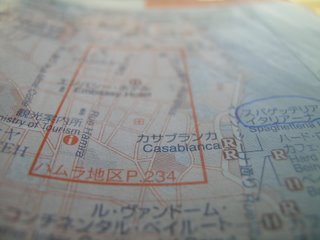
Well, I made it. A bunch of expats, sitting around, wasting time and money until the war/diplomatic efforts release them from this stupid prison. In fact, today while looking at a tourist map of the city, I found out that there's a restaurant not a mile from my hostel: Rest. Casablanca. Tomorrow, if I don't make a run for the Syrian border, that's where you'll find me. And if you do find me, could you bring a chopper?

YESTERDAY: After I left the coffee shop (which was closed today - the manager said none of the employees showed up), I ran to the news building. "Who needs a cameraman?" just ran up and down stairs, asking CNN, BBC, AP, whoever looked frantic "what can I do? I did film in undergrad!" It was sheer insanity, and (actually) BBC and the AP actually took my cell. "We...yeah, we might actually need you."


On the way out of the building, a news crew had set up on the sidewalk - they were: two women (chainsmoking (producers?)); one cameraman (struggling with the smoking generator); one male reporter (waiting impatiently for cameraman, under lights).

I introduced myself, told them what I could offer:

Producer 1: "Oh great, can you work a PD 170?"
Me: "I can work a 150, so unless there's a huge difference..."
Prod: "Oh, this is great - we need filler shots of the city, people buying groceries and things - this is so great - I mean, we don't even have an office yet, this is just so lucky to find you!"
(exchanges of cell phone numbers and agreements for meeting the next day and introductions and...the reporter walks over...)
Reporter: "Great, good to have you on the team - what's your name?"
Me (excited): "Thomas, sir."
Reporter: "Thomas, great to meet you - Name's Michael. Welcome to Fox News."

Gah!

Run run run!

The call to prayer was echoing through the city as I ran home. The city was buckling down.


Got back to Hostel. Talal's nephew (who helps run the place) was keeping score of the dead, proud that 19 Israelis had been wounded. I went upstairs to read and wait until the evening, when everyone would again find their way out to the roof and watch the sky.

The only person then in the room was one of the Poles - smoking a cigarette and sipping on Arak. "Oh, it's war war war" he said, "you want Arak?" I thought he said "Iraq" (putting me, as an American in the MidEast, on my conversational gaurd) - "what do you mean?" "Arak, Arak," shaking a small glass bottle at me. "Oh! Oh God yes" and we did shots to peace.

"Why are you here? Why come to Lebanon?" he asked. "I heard they had nice weather," I said. "Oh, yes...you are traveling?" "Yeah." "You are...you are 'life tired'?" "Yeah, I think so," I said, "looks like I picked the worst place in the world to rest up."

Then, I fell asleep until (see beginning of post).

Things are fine now. There have been a few localized hits in the city, but it's always the same - just damage to infrastructure...annoying. At least here. Things are, I'm sure, terribly worse in the south. I count myself lucky. Well, actually the conflict has escalated along the coast here and Hezbollah has begun hitting the Israeli naval ships - I believe with bombs attached to remote control toy boats (at least, that's what Talal says)...but still, Beirut is quiet as always. Tomorrow, the American and I might try for Syria, but my guess is that if the coffeeshop is open I'll just stick around.

Quick answers to FAQs:

Yes, I'm registered with the embassy
No, I don't think the syrians will let me through
Yes, I'm fine

Thursday, July 13, 2006

Life happens when you're making other plans.

This morning, Israel bombed my runway.

http://www.guardian.co.uk/israel/Story/0,,1819295,00.html

RECAP:
1) Woke up
2) Recovered my laundry from the clothesline on the roof of the hostel I've been staying in (Talal's New Hotel - not to be confused with Talal's (old) Hotel which, from what I can gather, was a brothel)
3) Packed my bags (well) - including one-way ticket to Amman
4) Walked into the lobby of the hostel to call for a cab to the airport
5) Found small group of people huddled around television in silence

(me, to Talal (not his real name)/hostel owner): "Hey, do you know how I could call a cab?"
(Talal): "To where, the airport!?" Cackling laughter from the group.

At six AM this morning, the Israeli military bombed (at least one) of the runways of Beirut Int'l - my flight for Jordan was scheduled to depart just after noon.

(me, to travel agent) "How long do you think it will be?"
(travel agent who had booked my ticket to Jordan, smiling) "Oh, you know..."

Israel has claimed that the runway target was/is part of a strategic air/land/sea blockade designed to hamper the purported delivery of weapons to Hizbullah (pro Palestinian militant faction operating in the south of Lebanon) but the strike, I'd guess, is aimed more at the simple disruption of Lebanese business and tourism. Why would Syria choose to fly weapons caches to Lebanon when it could simply smuggle them over ground (cheaper, more covert)? It's not a smart play for Israel - many Gulf States like doing business in Lebanon...attacking the West Bank is one thing, but this move directly antagonizes the entire region against the Israelis.

Anyway, so it begins. Depending upon how quickly diplomatic efforts can quell this fiasco, I'm going to be here in Beirut for at least a few days. Can't go south (border/warzone), can't go north or east (Syrians not too keen on the US Passport these days) and can't go west (Israeli naval blockade). Great.

The city's pace has quickened; everything has a pre-war feel to it. The cafe televisions that normally blare with comically risque middle eastern music videos are all tuned to Al-Jazeera. Nejmeh Square (where I take my coffee and wireless) has stepped up security from the normal thirty or so soldiers grouped about the Parliament building to a new deployment of one soldier positioned literally every thirty feet. This is a marked departure from last night, when the city seemed to be watching this all play out like a dramatic soap opera.

It's very, very interesting to see the difference in people at large as they move through the city. People here in Nejmeh are still shopping, still dining but you can almost see them walk on their toes, can almost feel the hairs on the backs of their necks. Here, in my little coffee shop, people are markedly more quiet, speaking in close tones.

I can't tell if I prefer this reaction to the only other "invasion" reaction I've ever witnessed: The American public during 9/11. This current skirmish is nowhere on that scale (yet), granted, but Sept11 is all I've got to go on. Then, we (Americans) were all in a frenzy, some crying out for peace, some demanding revenge and blood and counterattacks - but most, if I recall, were simply stunned, were hardpressed to know what to think let alone what to do. "Why?" through tears. In fact, Bush addressed this idea that Americans just didn't know how to operate in his first televised speech after the attacks: (http://www.whitehouse.gov/news/releases/2001/09/20010911-16.html).

Reading through it, it's as if he needed to take a group of stunned children by the hand and simply say "look, the first responders are doing their job, we've got a strong military and they're doing their job, the economy is top notch so no worries on money....look, your job is just to pray."

The Lebanese are remarkably good at this. They're demonstrating to me exactly how being under relatively constant threat manifests itself into the public character. Frankly, I'm impressed and a little bit...jealous. They all know how to walk through this fire drill; I don't envy their (geographic, historic, political) position - wouldn't wish it on most - but the resultant degree of emotional control...can't figure out just yet if it's strength or ambivalence or what.

In other/better news:

(me, to Hawlah - coffeehouse staff): "you mean, in person?"

(Hawlah): "Yes, in the United States"

"No. She used to date - remember Ben? I think they might have hung around Boston when they were...whatever they were...but..."

"I want - she is, to me, my best actress and my best singer. I want to be Arabian Jennifer Lopez."

"well, we all...have...dreams..."

Last night, before I left this coffee shop in Nejmeh Square, Beirut, the staff presented me with a free bag of coffee. Like I said, I spend a lot of time here. Again, only wireless in the area. So, I know them all pretty well - they've started to get me my coffee for free (they even know how to make it) and when I announced that I'd be departing for Jordan the next day, it was if a member of the staff was leaving. I didn't have the heart to tell them that a) I don't have a coffee maker and b) I didn't have room in my bag for a sack of coffee beans. Still, I was touched. As I left and they waved me goodbye I said, "wish me luck in Israel" at which point they broke into laughter. Store Owner (broken English): "tell them we say hello!"

This morning, the staff were all pretty happy to see me when I waltzed in after learning that no one would be flying in or out of Lebanon for a few days. I agreed to play guitar for Hawlah to help her practice her singing if she agreed to help me with my Arabic.

OK, I'm off to find the Washington Post reporter I met two days ago and ask about taking photos.

Shukran.

PS: As I'm leaving, transcript of portion of heated "conversation" between Parliamentarians (taking a break in the coffee shop) and an Israeli women/peace activist:

Woman: "If I make you angry, you will hit me I swear - you should not make the people angry! You have to - you must look - how many times do you have to look - you should not make the other person angry - if there are prisoners...then...diplomatic action! Lebanon must become strong inside..."

P: "30 years diplomatic! There is no solution - no diplomatic - we have many presidents in Israel in 30 years - the only way is to fight. Many times MY HOUSE on the border destroyed by Israeli. How much Israeli forces destroyed many countries - how many killed!"

"Yes but if you get invasion - you must ask why! Why we are doing this"

"We don't have time for why!"

"Oh I hate this - people dying - the war the violence all weapons...the people...you have to eliminate all weapons, the children dying...the..."

"No this is not the problem - there is the bigger problem - there is a bigger problem."

"It makes me cry - my people, my children - killing..."

"You have no leader - you have one leader - the president and then there is the resistance"

"Did you just say the resistance? HA! Killers!"

"You cannot take the Israeli at the wall...anything you have to do, big surrounded...we take two Israeli soldiers...this?"

Continued bickering and crying and screaming....